Following active fire suppression in Los Angeles, residential and commercial structures face immediate vulnerabilities from water saturation, thermal expansion fracture, and compromised load paths. In high-density…
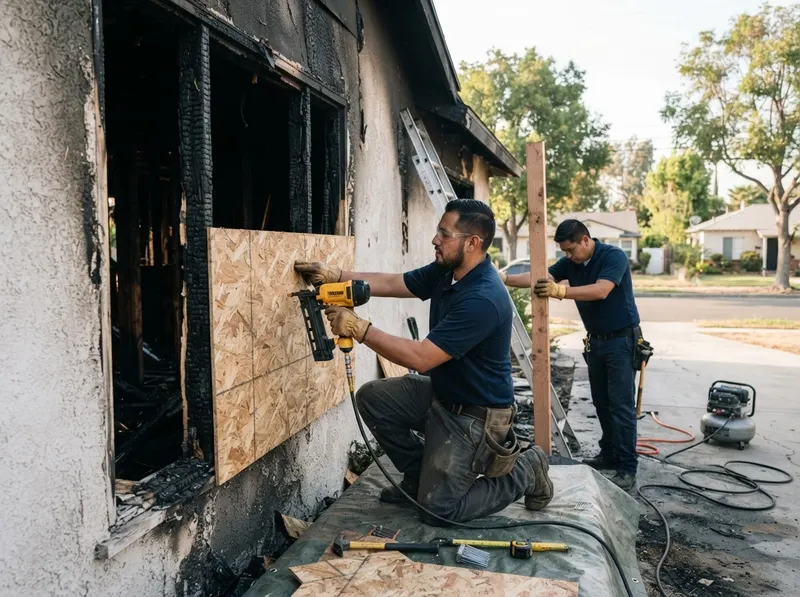
Following active fire suppression in Los Angeles, residential and commercial structures face immediate vulnerabilities from water saturation, thermal expansion fracture, and compromised load paths. In high-density hillside zones such as Silver Lake, Los Feliz, and Echo Park, street-access constraints demand prompt physical containment to prevent opportunistic entry and liability exposure. Structural shoring installs temporary engineered timber dead-shores and screw-jack bracing directly beneath sagging floor joists, charred headers, and fire-weakened ceiling trusses. This stabilization prevents structural collapse while structural engineers conduct post-fire assessments. Board-up crews apply 1/2-inch or 5/8-inch CDX plywood sheets anchored into framing studs using corrosion-resistant framing screws rather than nails, preventing tension pull-out during sudden windward pressure shifts.
Properties situated along coastal wind corridors or exposed foothill terrains, such as Pacific Palisades and Brentwood, face immediate secondary degradation from offshore marine moisture and soot redistribution. Fire crews often deploy thousands of gallons of suppression water, which saturates gypsum drywall and subflooring; sealing openings improperly traps this elevated relative humidity, rapidly accelerating microbial amplification within 48 hours. Emergency stabilization balances strict envelope sealing with controlled ventilation principles. If an owner requires simple entry restriction on an intact wall, standard exterior sheet closure suffices. If vertical weight-bearing wall studs have burned beyond a 25 percent cross-sectional reduction, vertical wood-post shoring with top and bottom sole plates becomes mandatory to maintain envelope integrity.
Valley-facing communities such as Studio City and Sherman Oaks, alongside eastern properties in Highland Park and western residences in Cheviot Hills, frequently contain older rafter networks that sustain heavy structural deflection under tile loads. Board-up crews mitigate these hazards by securing heavy-duty 10-mil woven poly tarps anchored with continuous wood furring strips across missing roof decking, routing water past compromised structural eaves into the grade line. A typical operational sequence proceeds in three distinct phases: first, clearing dangerous glass shards and fractured masonry; second, erecting temporary load-bearing cribbing or T-shores; third, locking exterior doors and framing apertures with non-destructive tension brackets that eliminate unnecessary screw-hole damage to preserved door casings.
Every job gets a firm, written price after a free on-site visit.
Tell us about your emergency board-up & structural shoring job in los angeles and we'll send a clear, written quote, usually the same day.
 Pro Fire Damage Restoration